
4 Low-Sugar Breakfasts That Won’t Spike Blood Sugar
Starting your morning with a balanced breakfast can set the tone for steady energy throughout the day. If you’re looking to keep your blood sugar stable, choosing low-sugar options with protein, healthy fats, and fiber is key. These four breakfast recipes are designed to satisfy your taste buds while keeping glucose levels in check. Whether you’re managing diabetes, following a low-carb lifestyle, or simply want to avoid the mid-morning crash, these meals deliver flavor without the sugar spike.
Why Blood Sugar Balance Matters at Breakfast
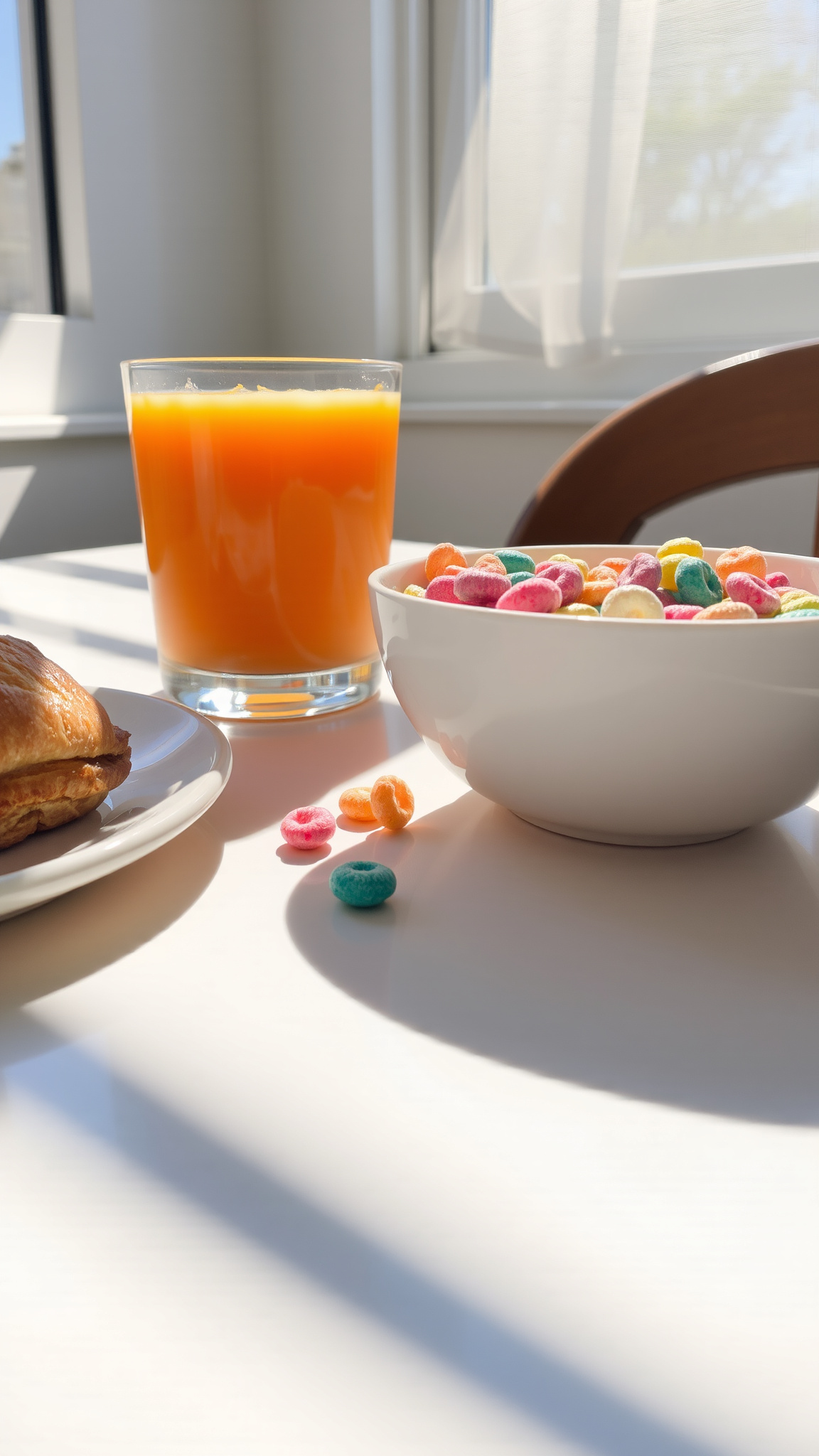
The first meal of the day has a profound impact on your metabolic response for hours to come. When you consume high-sugar breakfasts like sweetened cereals, pastries, or fruit juice, your blood glucose rises rapidly. This triggers a surge of insulin, which can lead to an energy crash, increased hunger, and cravings later in the morning.
A blood sugar spike occurs when carbohydrates are digested quickly and converted to glucose faster than your body can process it efficiently. Over time, repeated spikes can contribute to insulin resistance, weight gain, and increased risk of type 2 diabetes.
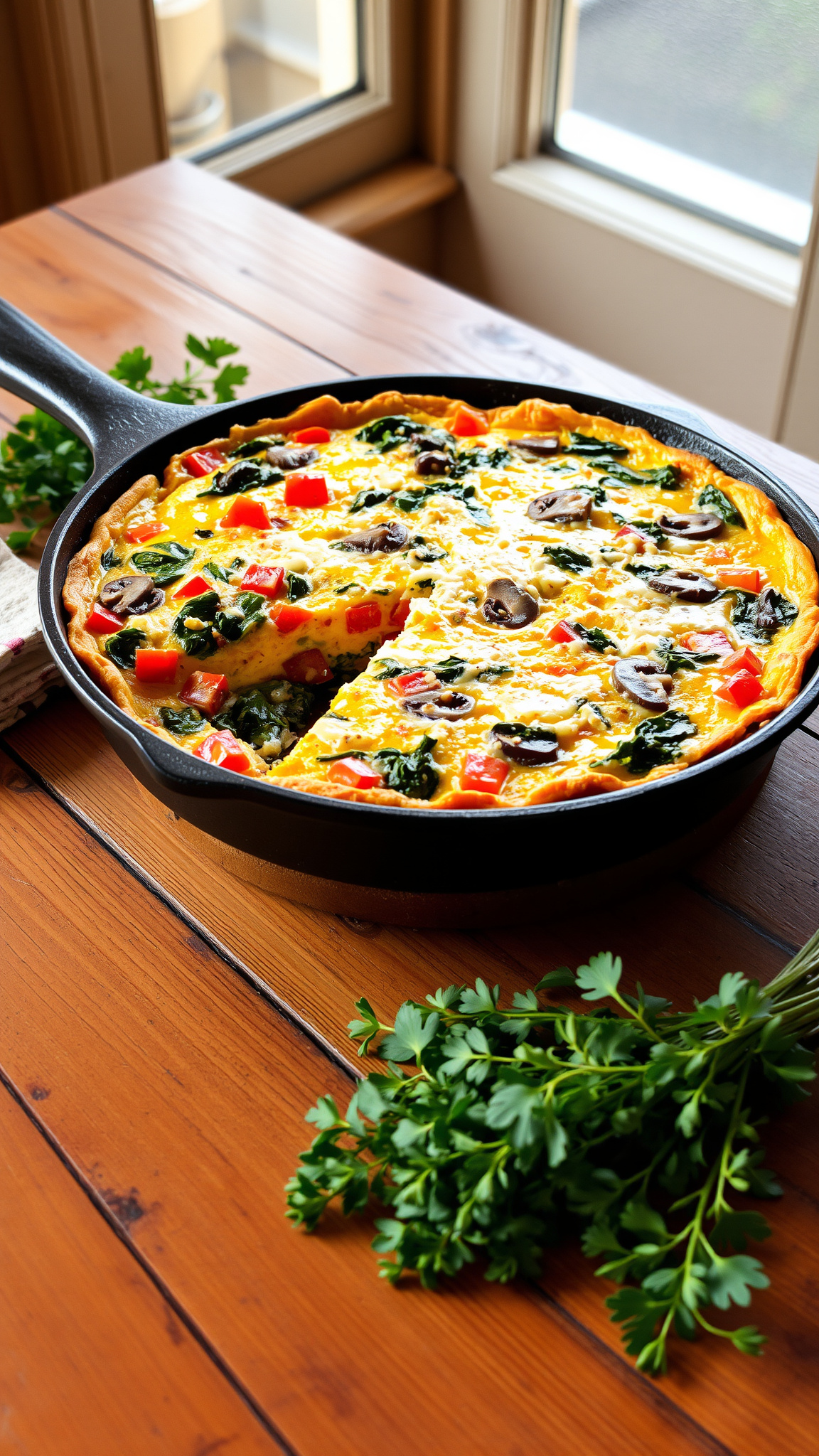
Recipe 1: Vegetable and Cheese Frittata
This protein-rich frittata combines eggs with fiber-filled vegetables and satisfying cheese. It’s naturally low in carbohydrates and can be prepared ahead for busy mornings.
Ingredients
- 6 large eggs
- 1/4 cup whole milk or unsweetened almond milk
- 1 cup fresh spinach, chopped
- 1/2 cup bell peppers, diced (any color)
- 1/2 cup mushrooms, sliced
- 1/4 cup red onion, finely chopped
- 1/2 cup shredded cheddar or feta cheese
- 2 tablespoons olive oil
- 1/2 teaspoon sea salt
- 1/4 teaspoon black pepper
- 1/4 teaspoon garlic powder
- Fresh herbs like parsley or chives (optional)
Step-by-Step Instructions
Start by preheating your oven to 375 degrees Fahrenheit. This temperature ensures the frittata cooks evenly without browning too quickly on top.
Heat the olive oil in a 10-inch oven-safe skillet over medium heat. Once the oil shimmers, add the diced onions and cook for about two minutes until they begin to soften and become fragrant. The onions provide a subtle sweetness without adding sugar.
Add the bell peppers and mushrooms to the skillet. Cook for another four to five minutes, stirring occasionally, until the vegetables release their moisture and begin to caramelize slightly. The mushrooms should reduce in size and the peppers should soften but still retain some texture.
Toss in the chopped spinach and stir until it wilts completely, which takes about one minute. Spinach adds volume, nutrients, and fiber without contributing carbohydrates that would affect blood sugar.
While the vegetables cook, crack the eggs into a medium bowl. Add the milk, salt, pepper, and garlic powder. Whisk vigorously for about 30 seconds until the mixture is completely uniform and slightly frothy. This incorporation of air makes the frittata lighter.
Pour the egg mixture evenly over the cooked vegetables in the skillet. Use a spatula to gently distribute the vegetables so they’re evenly dispersed throughout the eggs. Sprinkle the shredded cheese over the top.
Let the frittata cook on the stovetop for two to three minutes without stirring. You’ll notice the edges beginning to set while the center remains liquid. This initial cooking on the stovetop helps create a firmer base.
Carefully transfer the skillet to the preheated oven. Bake for 12 to 15 minutes, or until the center is set and no longer jiggles when you gently shake the pan. The top should be lightly golden and the eggs should be cooked through.
Remove from the oven and let the frittata rest for three minutes before slicing. This resting period allows the eggs to finish cooking with residual heat and makes slicing cleaner. Cut into wedges and garnish with fresh herbs if desired.
Nutrition Facts
| Nutrient | Per Serving (1/4 of frittata) |
|---|---|
| Calories | 215 |
| Total Fat | 16g |
| Saturated Fat | 6g |
| Cholesterol | 285mg |
| Sodium | 420mg |
| Total Carbohydrates | 4g |
| Dietary Fiber | 1g |
| Sugars | 2g |
| Protein | 14g |
Recipe 2: Greek Yogurt Parfait with Nuts and Seeds
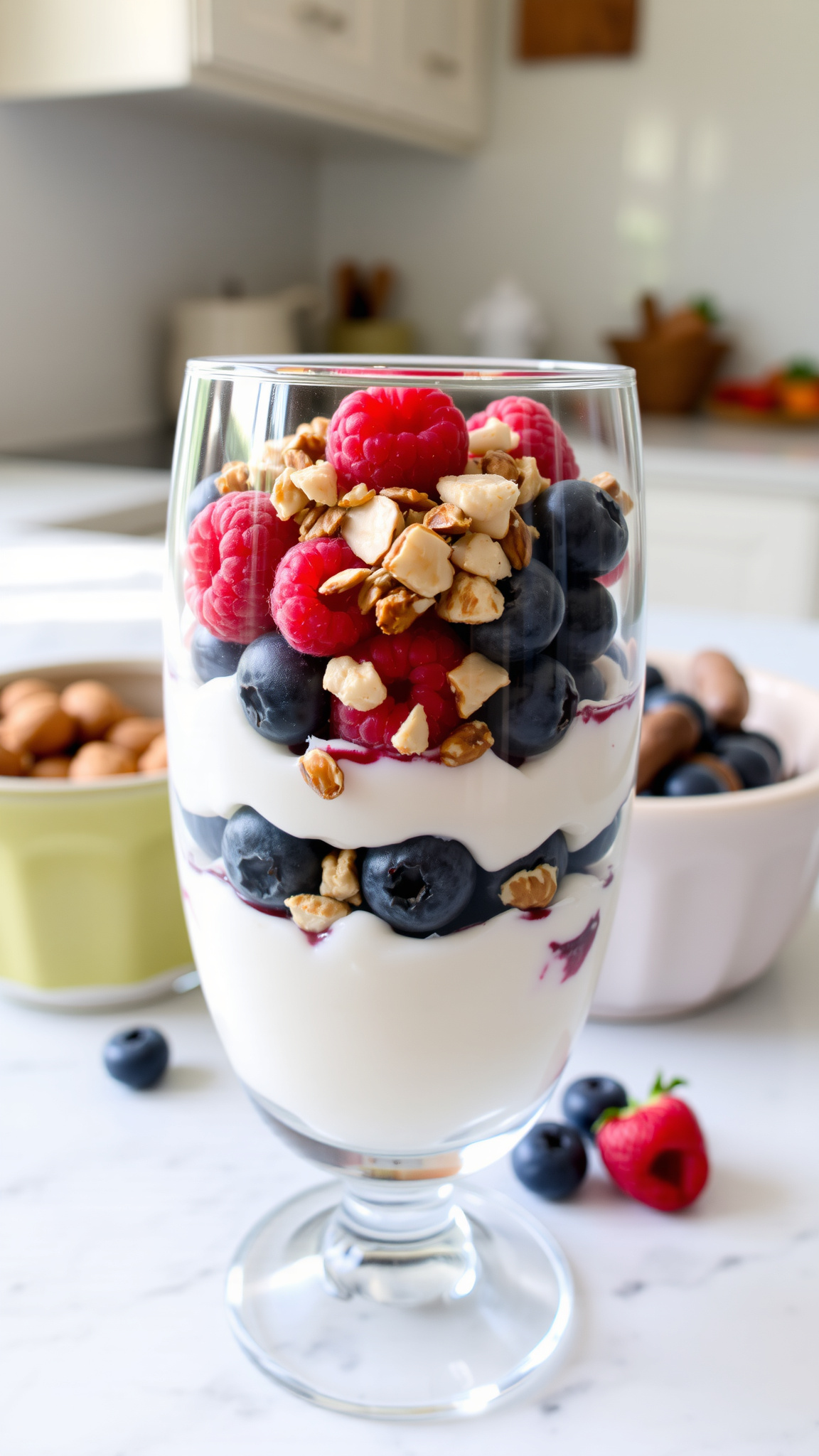
This parfait uses full-fat Greek yogurt as a protein-rich base, layered with crunchy nuts and seeds instead of granola. The result is a creamy, satisfying breakfast with minimal sugar.
Ingredients
- 1 cup plain full-fat Greek yogurt (unsweetened)
- 2 tablespoons almonds, roughly chopped
- 1 tablespoon walnuts, roughly chopped
- 1 tablespoon pumpkin seeds
- 1 tablespoon sunflower seeds
- 1 tablespoon ground flaxseed
- 1/4 cup fresh blueberries
- 1/4 cup fresh raspberries
- 1/2 teaspoon vanilla extract
- 1/4 teaspoon cinnamon
- Optional: 3 to 4 drops liquid stevia or monk fruit sweetener
Step-by-Step Instructions
Begin by selecting a high-quality plain Greek yogurt with at least 15 grams of protein per cup. Check the nutrition label to ensure there are no added sugars. Full-fat versions provide more satiety and help with the absorption of fat-soluble vitamins.
In a small bowl, combine the chopped almonds, walnuts, pumpkin seeds, sunflower seeds, and ground flaxseed. Mix these together to create your nut and seed blend. This mixture provides healthy fats, protein, and a satisfying crunch that replaces sugar-laden granola.
If you prefer a lightly toasted flavor, spread the nut and seed mixture on a dry skillet over medium-low heat. Toast for two to three minutes, stirring constantly, until fragrant. Be careful not to burn them. Let cool completely before using.
In a separate bowl, add the Greek yogurt, vanilla extract, and cinnamon. Stir until the vanilla and cinnamon are evenly distributed throughout the yogurt. If you prefer a sweeter taste, add the liquid stevia or monk fruit sweetener at this stage. These sugar substitutes won’t impact blood glucose the way regular sugar does.
Rinse the berries gently under cool water and pat them dry with a paper towel. Berries are naturally lower in sugar compared to other fruits and are rich in antioxidants and fiber, which help moderate blood sugar response.
To assemble the parfait, spoon half of the yogurt mixture into a serving bowl or glass. Add a layer of half the nut and seed mixture, then top with half of the berries. Repeat the layers with the remaining ingredients.
For meal prep, you can prepare the yogurt mixture and nut blend separately and store them in airtight containers in the refrigerator for up to four days. Assemble fresh each morning to maintain the best texture, as the nuts and seeds can become soggy if left in the yogurt overnight.
Nutrition Facts
| Nutrient | Per Serving (entire parfait) |
|---|---|
| Calories | 385 |
| Total Fat | 24g |
| Saturated Fat | 7g |
| Cholesterol | 30mg |
| Sodium | 65mg |
| Total Carbohydrates | 18g |
| Dietary Fiber | 6g |
| Sugars | 9g |
| Protein | 25g |
Recipe 3: Avocado and Smoked Salmon Plate
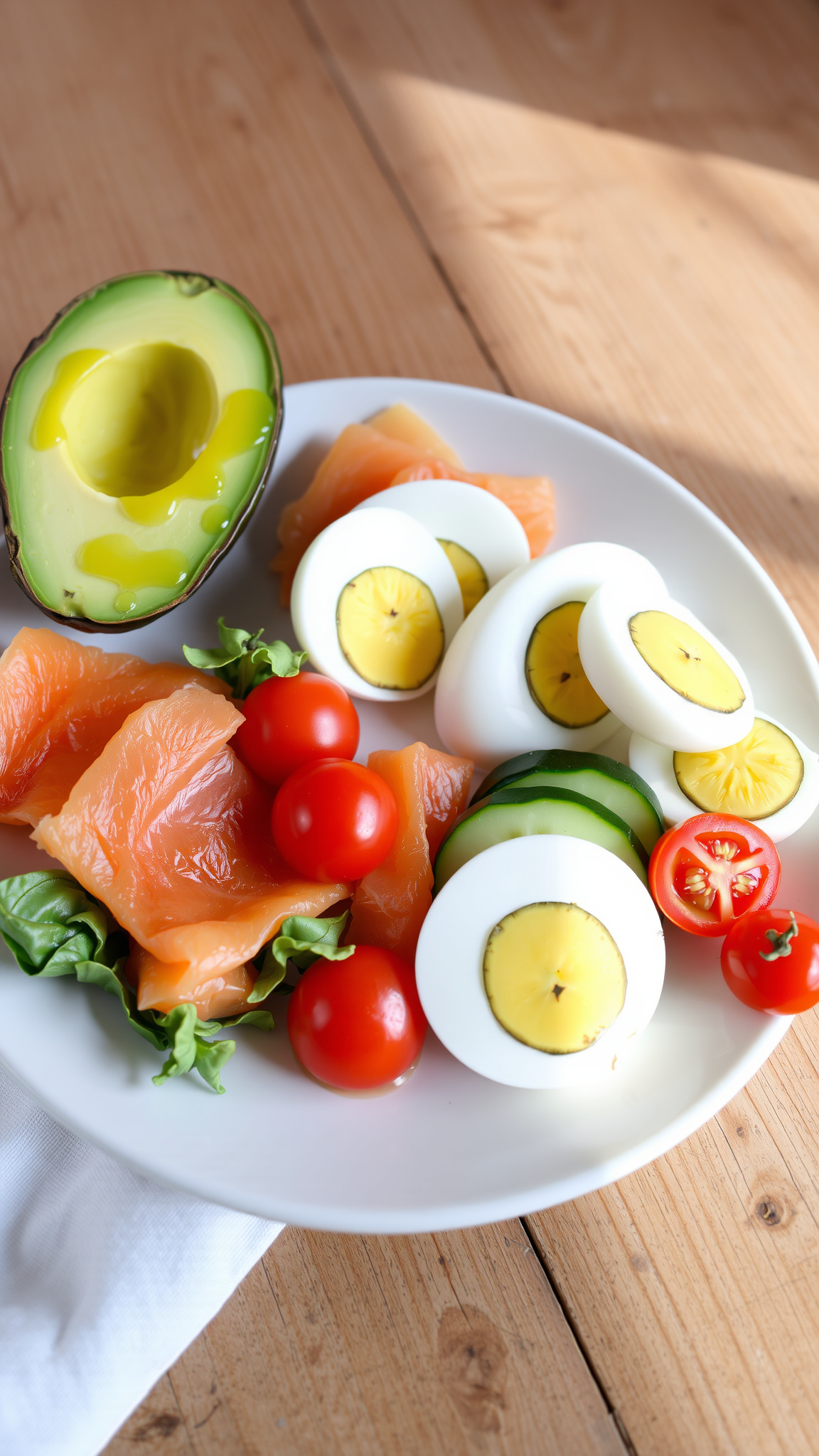
This savory breakfast plate combines healthy fats from avocado with protein-rich smoked salmon. It’s naturally low in carbohydrates and requires no cooking, making it perfect for rushed mornings.
Ingredients
- 1 medium ripe avocado
- 3 ounces smoked salmon
- 2 large eggs, hard-boiled
- 1/2 cup cucumber, sliced
- 1/2 cup cherry tomatoes, halved
- 1 tablespoon capers
- 1 tablespoon extra virgin olive oil
- 1 teaspoon fresh lemon juice
- 1/4 teaspoon black pepper
- 1/4 teaspoon dried dill or 1 teaspoon fresh dill
- Optional: 1 tablespoon cream cheese (full-fat)
Step-by-Step Instructions
Start by preparing the hard-boiled eggs if you haven’t made them ahead. Place the eggs in a small saucepan and cover with cold water by about an inch. Bring to a boil over high heat, then immediately remove from heat and cover the pan. Let sit for 10 minutes for perfectly cooked eggs.
After 10 minutes, transfer the eggs to a bowl of ice water to stop the cooking process. This prevents the greenish ring around the yolk and makes peeling easier. Once cooled, peel the eggs and slice them in half lengthwise.
Cut the avocado in half and remove the pit. Use a spoon to scoop out the flesh, or slice it while still in the skin and then scoop out. Slice the avocado into thin wedges or dice it into cubes, depending on your preference.
Arrange the avocado on one side of a large plate. Drizzle with the lemon juice immediately to prevent browning. The citrus not only preserves color but also adds a bright flavor that complements the richness of the avocado.
Place the smoked salmon next to the avocado. If using sliced salmon, you can roll or fold it for visual appeal. Quality smoked salmon should have a silky texture and mild smoky flavor without being overly salty.
Add the halved hard-boiled eggs to the plate. These provide additional protein and healthy fats, particularly in the yolk, which contains important nutrients like choline.
Arrange the cucumber slices and halved cherry tomatoes around the plate. These vegetables add crunch, freshness, and additional fiber with minimal impact on blood sugar.
Scatter the capers over the salmon and vegetables. These briny little buds add a punch of flavor without any sugar or significant calories.
Drizzle the entire plate with extra virgin olive oil. Sprinkle with black pepper and dill. If you enjoy a creamy element, add small dollops of full-fat cream cheese alongside the salmon.
This meal is best enjoyed immediately while the ingredients are fresh and cool. However, you can prepare components like the hard-boiled eggs and sliced vegetables the night before to save time in the morning.
Nutrition Facts
| Nutrient | Per Serving (entire plate) |
|---|---|
| Calories | 445 |
| Total Fat | 34g |
| Saturated Fat | 7g |
| Cholesterol | 405mg |
| Sodium | 820mg |
| Total Carbohydrates | 14g |
| Dietary Fiber | 8g |
| Sugars | 4g |
| Protein | 26g |
Recipe 4: Almond Flour Pancakes with Cinnamon Butter
These grain-free pancakes use almond flour instead of wheat flour, dramatically reducing the carbohydrate content while increasing protein and healthy fats. They’re fluffy, satisfying, and won’t cause the blood sugar spike associated with traditional pancakes.
Ingredients
For the pancakes:
- 1 1/2 cups blanched almond flour
- 3 large eggs
- 1/4 cup unsweetened almond milk
- 2 tablespoons melted coconut oil or butter, plus more for cooking
- 1 teaspoon baking powder
- 1/2 teaspoon vanilla extract
- 1/4 teaspoon sea salt
- 1/4 teaspoon cinnamon
- Optional: 1/4 teaspoon monk fruit sweetener
For the cinnamon butter:
- 4 tablespoons unsalted butter, softened
- 1/2 teaspoon cinnamon
- 1/8 teaspoon vanilla extract
- Pinch of sea salt
Step-by-Step Instructions
Begin by making the cinnamon butter, as this can be prepared while the pancake batter rests. In a small bowl, combine the softened butter with the cinnamon, vanilla extract, and pinch of salt. Use a fork to mash and stir until all ingredients are fully incorporated and the mixture is smooth. Set aside at room temperature or refrigerate if making ahead.
For the pancake batter, add the almond flour to a medium mixing bowl. Make sure you’re using blanched almond flour, not almond meal, as the finer texture produces better pancakes. Add the baking powder, salt, cinnamon, and monk fruit sweetener if using. Whisk these dry ingredients together to remove any lumps and ensure even distribution.
In a separate bowl, crack the eggs and beat them lightly with a fork or whisk. Add the almond milk, melted coconut oil or butter, and vanilla extract. Whisk until the wet ingredients are completely combined.
Pour the wet ingredients into the bowl with the dry ingredients. Stir gently with a spatula or wooden spoon until just combined. The batter should be thick but pourable, similar to traditional pancake batter but slightly thicker. Let the batter rest for five minutes. This allows the almond flour to absorb the liquid, resulting in better texture.
While the batter rests, heat a non-stick skillet or griddle over medium-low heat. Almond flour pancakes require lower heat than traditional pancakes because they brown more quickly due to the higher fat content. Add a small amount of coconut oil or butter to the pan.
Once the pan is heated, pour about 1/4 cup of batter for each pancake. Use the back of a spoon to gently spread the batter into a circle about 3 to 4 inches in diameter. Almond flour batter doesn’t spread as much as wheat flour batter, so shaping helps create uniform pancakes.
Cook the pancakes for about three to four minutes on the first side. Watch for small bubbles to form on the surface and for the edges to look set and slightly dry. These visual cues indicate it’s time to flip.
Carefully flip the pancakes using a thin spatula. Cook for another two to three minutes on the second side until golden brown. The pancakes should be firm to the touch and cooked through. Because almond flour is denser than wheat flour, these pancakes are more delicate when hot, so handle them gently.
Transfer cooked pancakes to a plate and keep warm while you cook the remaining batter. You should get about six to eight small pancakes from this recipe.
Serve the pancakes warm with a generous spread of the cinnamon butter melting on top. For additional protein, consider serving with a side of turkey sausage or a few slices of bacon. If you want a hint of sweetness without sugar, a small amount of sugar-free maple syrup can be used, though the cinnamon butter provides plenty of flavor on its own.
Nutrition Facts
| Nutrient | Per Serving (2 pancakes with 1 tablespoon cinnamon butter) |
|---|---|
| Calories | 395 |
| Total Fat | 35g |
| Saturated Fat | 12g |
| Cholesterol | 195mg |
| Sodium | 310mg |
| Total Carbohydrates | 10g |
| Dietary Fiber | 4g |
| Sugars | 2g |
| Protein | 13g |
Understanding the Blood Sugar Impact
Each of these breakfast recipes is designed around the principle of minimizing rapid glucose elevation. To understand why they work, it helps to know what causes blood sugar spikes in the first place.
Carbohydrates break down into glucose during digestion. Simple carbohydrates and added sugars break down quickly, flooding your bloodstream with glucose. Complex carbohydrates and those paired with protein, fat, and fiber break down more slowly, providing a gradual release of energy.
The glycemic index measures how quickly foods raise blood sugar on a scale of 0 to 100. Foods with a high glycemic index (70 and above) cause rapid spikes, while low glycemic index foods (55 and below) produce a more gradual rise. The glycemic load takes serving size into account, providing an even more practical measure.
These recipes keep carbohydrates low while emphasizing nutrients that slow digestion. Protein triggers the release of hormones that moderate insulin response and promote fullness. Dietary fat slows gastric emptying, meaning food moves through your digestive system more gradually. Fiber, particularly soluble fiber, forms a gel-like substance in your gut that slows glucose absorption.
The frittata derives its minimal carbohydrates primarily from vegetables, with substantial protein from eggs and cheese. The Greek yogurt parfait combines protein-rich dairy with nuts and seeds that provide healthy fats and fiber. The avocado and salmon plate offers omega-3 fatty acids and monounsaturated fats alongside high-quality protein. The almond flour pancakes replace grain-based flour with ground nuts, trading starch for protein and healthy fats.
Tips for Blood Sugar Friendly Breakfasts
Beyond these specific recipes, several strategies can help you create your own low-sugar breakfasts that support stable blood glucose.
Prioritize protein at every meal. Aim for at least 20 to 30 grams of protein at breakfast. This could come from eggs, Greek yogurt, cottage cheese, lean meats, fish, or plant-based sources like tofu or hemp seeds.
Include healthy fats with each meal. Avocado, nuts, seeds, olive oil, coconut oil, and fatty fish all provide fats that slow digestion and increase satiety. Contrary to outdated nutritional advice, dietary fat does not directly raise blood sugar.
Choose non-starchy vegetables freely. Spinach, kale, peppers, mushrooms, tomatoes, cucumbers, and cruciferous vegetables like broccoli and cauliflower add volume, nutrients, and fiber with minimal carbohydrate impact.
Be selective with fruit. While fruit contains natural sugars, berries are your best bet due to their lower sugar content and higher fiber ratio. A half cup of berries paired with protein and fat will affect blood sugar much differently than a large banana or glass of juice.
Read labels carefully for hidden sugars. Many breakfast foods marketed as healthy contain significant added sugars. Yogurt, granola, cereal, breakfast bars, and flavored oatmeal often have 10 to 20 grams of added sugar per serving. Check ingredients for terms like cane sugar, honey, agave, corn syrup, and concentrated fruit juice.
Consider meal timing. Eating breakfast within an hour or two of waking can help regulate your metabolic rhythm. Some people practicing intermittent fasting may skip breakfast, which can work for blood sugar management if done thoughtfully, but breaking your fast with a balanced meal is important.
Stay hydrated. Proper hydration supports healthy blood sugar levels. Water is always the best choice, but unsweetened coffee and tea can be included. Avoid fruit juices, smoothies with added sweeteners, and specialty coffee drinks loaded with sugar.
The Role of Fiber in Blood Sugar Control
Fiber deserves special attention in any discussion of blood sugar management. This indigestible component of plant foods comes in two forms, each with distinct benefits.
Soluble fiber dissolves in water to form a gel-like substance. This gel slows the absorption of glucose into your bloodstream, preventing spikes. Foods rich in soluble fiber include flaxseeds, chia seeds, avocados, Brussels sprouts, and legumes. The Greek yogurt parfait with ground flaxseed and the avocado salmon plate both leverage soluble fiber.
Insoluble fiber doesn’t dissolve in water and adds bulk to your digestive system. While it doesn’t directly slow glucose absorption, it promotes healthy digestion and helps you feel full longer, which can prevent overeating and subsequent blood sugar issues. Vegetables, nuts, and seeds provide insoluble fiber.
Most whole foods contain both types of fiber. Aiming for at least 25 to 35 grams of total fiber daily can improve blood sugar control, support cardiovascular health, and aid in weight management. These breakfast recipes contribute significantly to that goal without relying on processed fiber supplements.
Making These Recipes Work for Your Lifestyle
Consistency matters more than perfection when managing blood sugar through diet. These recipes can be adapted to fit various schedules, preferences, and dietary needs.
For meal prep enthusiasts, the frittata can be baked on Sunday and portioned for the week. Store slices in airtight containers and reheat gently in the microwave or oven. The cinnamon butter keeps well in the refrigerator for two weeks, and the almond flour pancakes can be made ahead and frozen with parchment paper between layers.
If you’re following a dairy-free diet, substitute the cheese in the frittata with nutritional yeast or omit it entirely. Use coconut yogurt instead of Greek yogurt, and replace butter with coconut oil or vegan butter alternatives.
For those on a strict ketogenic diet, these recipes align well with your macros. The net carbohydrates (total carbs minus fiber) remain low enough to maintain ketosis while providing satisfying variety.
If cost is a concern, eggs and seasonal vegetables offer the most budget-friendly option. Canned salmon can replace smoked salmon at a fraction of the price while providing similar nutritional benefits. Buying nuts and seeds in bulk reduces cost significantly.
Time-pressed mornings benefit from the no-cook avocado and salmon plate or a batch of hard-boiled eggs kept in the refrigerator. You can also prepare overnight chia seed pudding with unsweetened almond milk, vanilla, and a handful of nuts for another quick low-sugar option.
Conclusion
Managing blood sugar doesn’t mean sacrificing flavor or satisfaction at breakfast. These four recipes demonstrate that you can enjoy diverse, delicious morning meals while keeping glucose levels stable. The frittata offers vegetable-packed comfort, the Greek yogurt parfait provides creamy crunch, the avocado and salmon plate delivers savory sophistication, and the almond flour pancakes prove that even traditionally high-carb favorites can be reimagined.
The common thread among all these options is their emphasis on whole foods, quality protein, healthy fats, and fiber while minimizing added sugars and refined carbohydrates. By starting your day with balanced nutrition, you set yourself up for sustained energy, better focus, reduced cravings, and improved metabolic health.
Experiment with these recipes, adjust them to your tastes, and pay attention to how your body responds. Blood sugar management is personal, and what works perfectly for one person may need modification for another. With these foundational recipes and principles, you have the tools to create breakfasts that nourish your body and support your health goals.


