
How to Make a Gluten-Free Sourdough Discard Recipe
If you keep a gluten-free sourdough starter, you already know how quickly discard can pile up. Instead of wasting it, you can turn that tangy, bubbly mixture into a simple, tasty bake that works for breakfast, snacks, or as a side with meals. This gluten-free sourdough discard recipe is designed to be dependable, flexible, and easy to adapt, even if your starter is young or mildly active. The goal is good flavor, soft texture, and zero waste, all in one simple method.
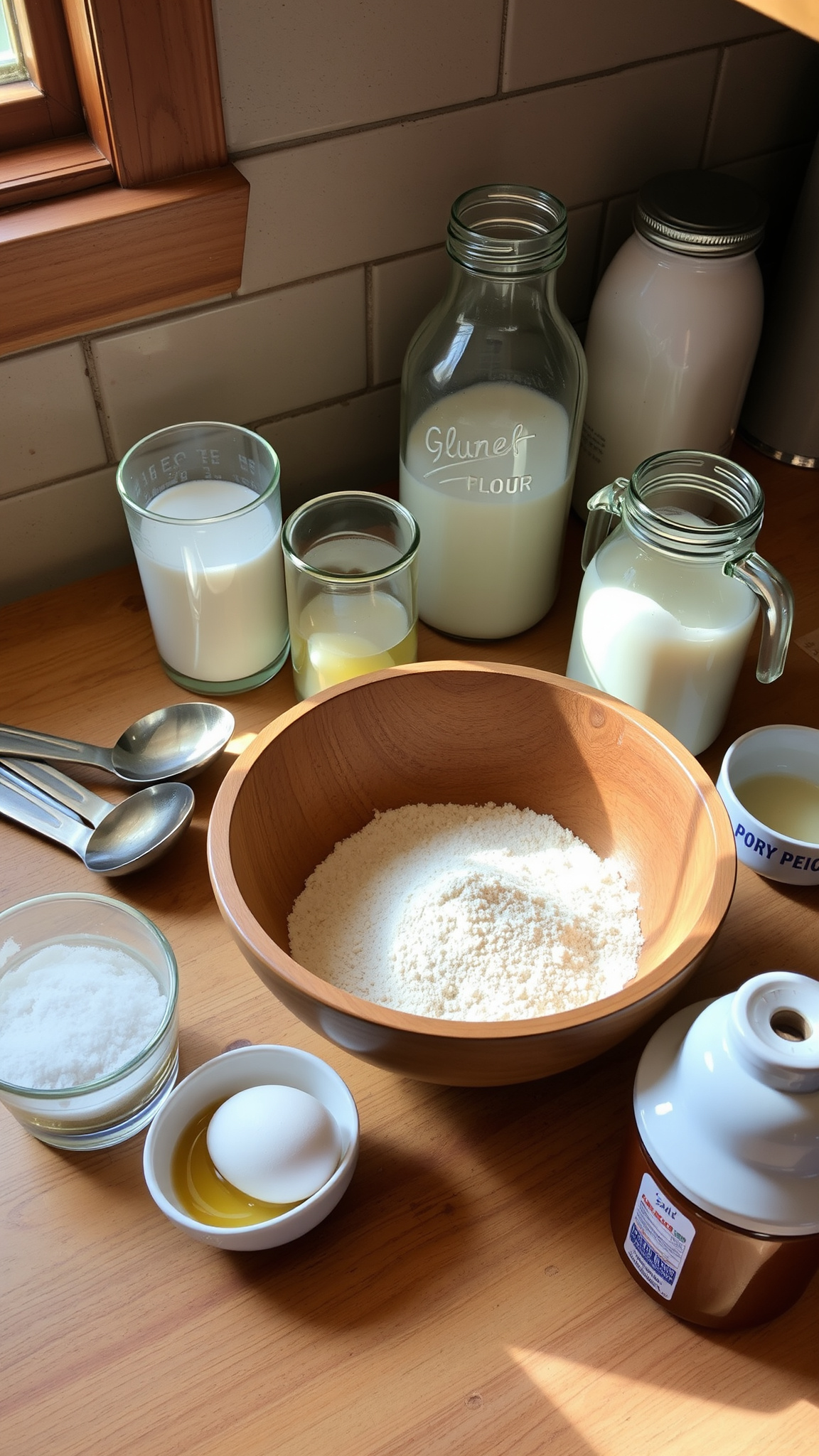
Ingredients List
Dry Ingredients
- 1 cup gluten-free all-purpose flour blend (with xanthan gum)
- 1/2 teaspoon baking powder
- 1/2 teaspoon baking soda
- 1/2 teaspoon fine salt
Wet Ingredients
- 1 cup gluten-free sourdough discard (unfed starter)
- 1 large egg, room temperature
- 2 tablespoons melted butter or neutral oil
- 2 tablespoons milk (dairy or unsweetened plant milk)
- 1 teaspoon honey or sugar (optional, balances tang)
Step-by-Step Instructions
- Preheat and prepare the pan
Preheat your oven to 375°F (190°C). Lightly grease an 8-inch round pan or line it with parchment paper. This helps prevent sticking, which is important with gluten-free batters. - Mix the dry ingredients
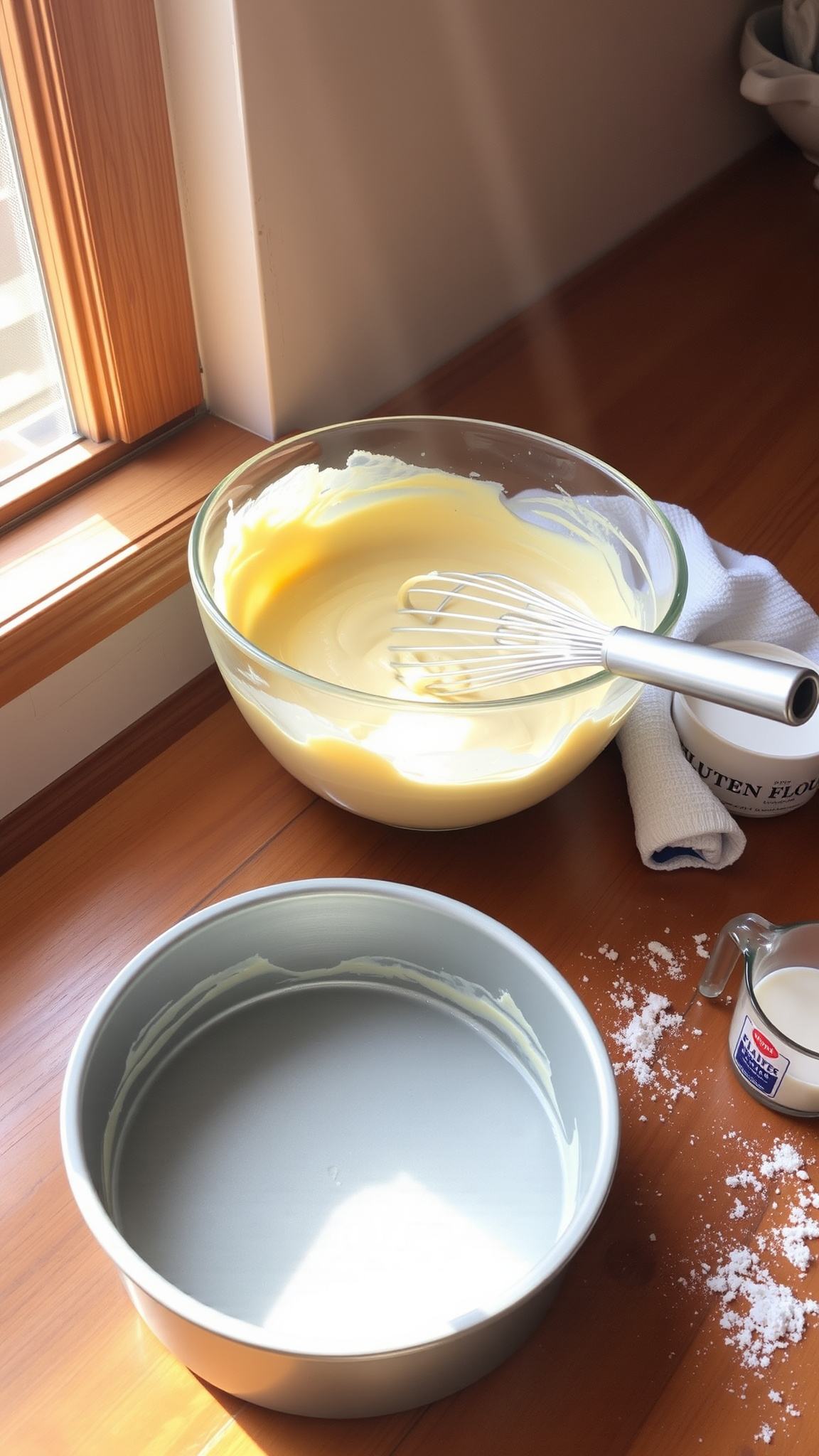
In a medium bowl, whisk together the gluten-free flour, baking powder, baking soda, and salt. Whisking helps distribute the leavening evenly and prevents dense spots. - Combine the wet ingredients
In a separate bowl, stir together the sourdough discard, egg, melted butter or oil, milk, and honey or sugar if using. Mix until smooth and well blended. - Bring the batter together
Add the dry mixture to the wet mixture. Stir gently with a spatula until no dry flour remains. The batter should be thick but spreadable. If it feels too stiff, add one tablespoon of milk at a time until it loosens slightly. - Rest the batter briefly
Let the batter rest for 5 to 10 minutes. This allows the gluten-free flour to hydrate, which improves texture and prevents a gritty bite. - Transfer and level
Pour the batter into the prepared pan. Smooth the top with a spatula so it bakes evenly. - Bake until set
Bake for 22 to 28 minutes, or until the top looks firm and a toothpick inserted in the center comes out mostly clean with a few soft crumbs. - Cool before slicing
Let the bread cool in the pan for 10 minutes, then transfer to a rack. Allow it to cool another 15 minutes before cutting to avoid crumbling.
How to Serve
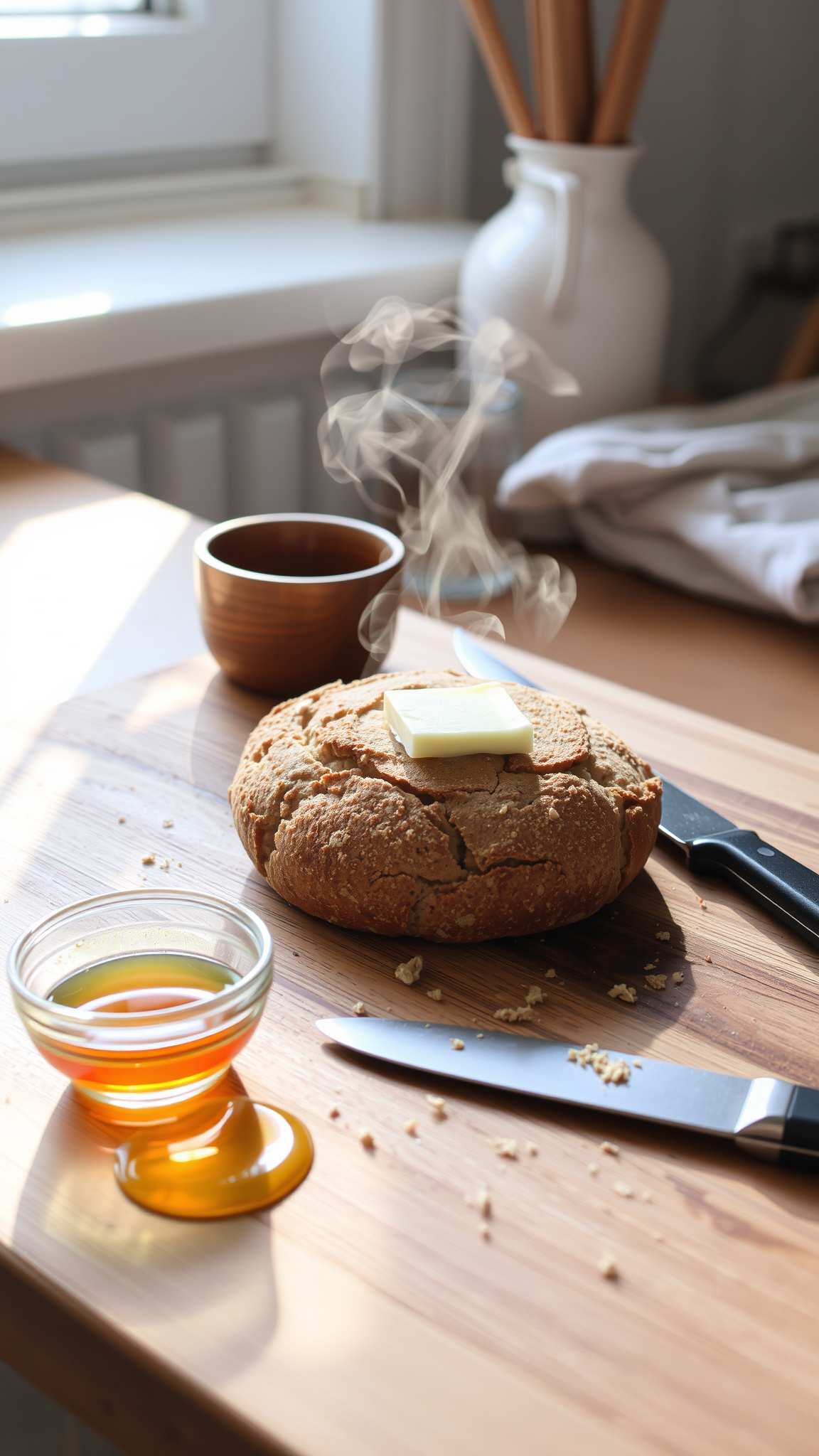
This gluten-free sourdough discard bake works in both sweet and savory ways. Serve warm with butter, honey, or jam for breakfast. For savory meals, slice and serve with soups, stews, or salads as a quick side bread. It also toasts well, so leftovers can be used for simple toast with nut butter or avocado. Because the crumb is soft, thicker slices hold up best when topping.
Storage Instructions
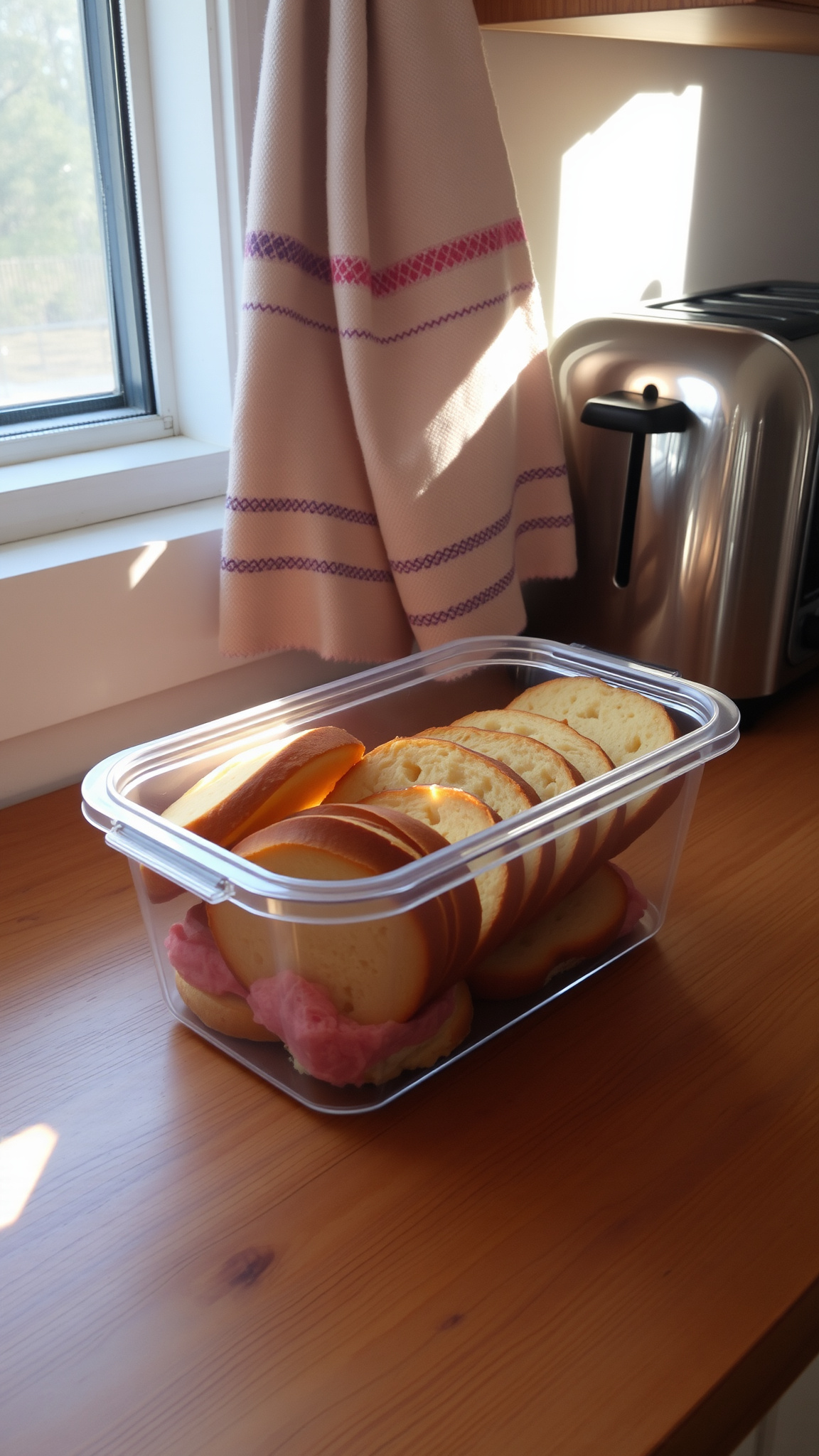
Once fully cooled, store slices in an airtight container at room temperature for up to 2 days. For longer storage, refrigerate for up to 5 days, making sure it is well wrapped to prevent drying out. For freezing, wrap individual slices tightly and place in a freezer-safe bag. Freeze for up to 2 months. Reheat in a toaster or warm oven until heated through.
Helpful Tips
Use discard that smells mildly tangy but not sharply sour. Very acidic discard can overpower the flavor and affect rise. Always check that your gluten-free flour blend includes xanthan gum or another binder, or add 1/4 teaspoon if needed. Letting the batter rest is important for texture, so do not skip that step. If your kitchen is cold, slightly warm milk helps the batter stay smooth and easier to spread.
Variations
For a savory version, mix in 1/3 cup shredded cheese and a tablespoon of chopped herbs like chives or parsley. For a sweet option, add 1/4 cup chocolate chips or dried fruit and increase honey or sugar to 3 tablespoons. You can also turn the batter into muffins by dividing it into lined muffin cups and baking at the same temperature for about 15 to 18 minutes. For a dairy-free version, use plant milk and oil instead of butter.
Nutrition Facts (Per Slice, Based on 8 Slices)
| Nutrient | Amount |
|---|---|
| Calories | 165 kcal |
| Carbohydrates | 24 g |
| Protein | 4 g |
| Fat | 6 g |
| Saturated Fat | 2 g |
| Fiber | 2 g |
| Sugar | 3 g |
| Sodium | 240 mg |
Values are estimates and may vary based on ingredients used.
FAQs
Can I use active starter instead of discard?
Yes, but the flavor will be milder and the texture may be slightly lighter. Discard gives more tang, which many people prefer in sourdough-style bakes.
Why didn’t my bread rise much?
Gluten-free batters rely more on chemical leavening than fermentation. Make sure your baking powder and baking soda are fresh and measure carefully.
Can I make this without egg?
You can replace the egg with a flax egg made from 1 tablespoon ground flaxseed mixed with 2.5 tablespoons water. Let it thicken before adding.
Is gluten-free sourdough really gluten-free?
It is only gluten-free if the starter and all flours used are certified gluten-free. Traditional wheat-based starters are not safe for gluten-free diets.
Can I double the recipe?
Yes, double all ingredients and bake in a larger pan. Baking time may increase by 5 to 10 minutes, so check for doneness in the center.
Conclusion
This gluten-free sourdough discard recipe is a simple way to reduce waste while getting real value from your starter. It is flexible, easy to adjust, and works for both sweet and savory uses. If you bake with gluten-free sourdough often, this is a dependable base recipe to keep in your rotation. Try it once, then make it your own with different mix-ins and flavors, and enjoy using every bit of your starter with confidence.


