
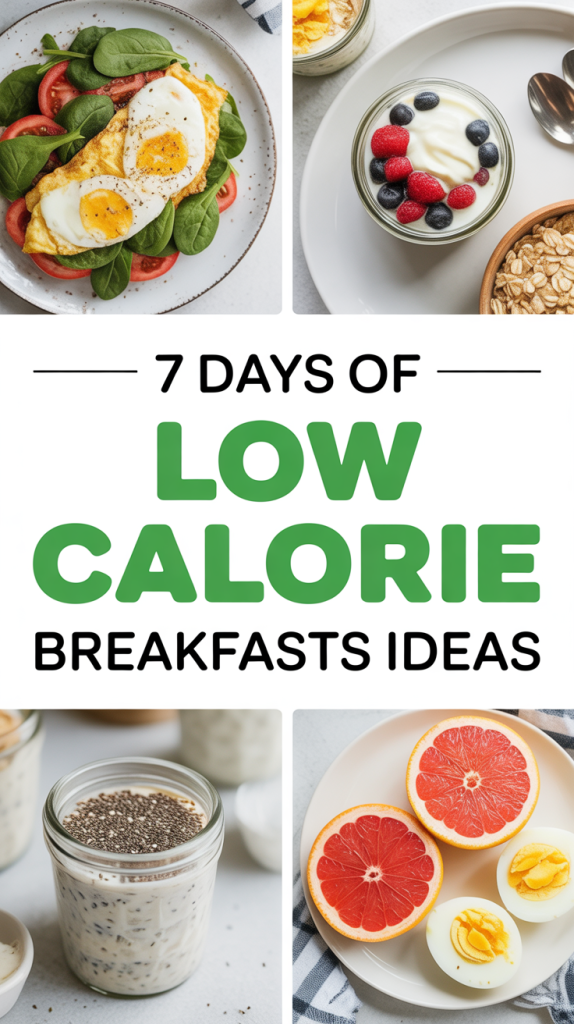
7 days Low-Calorie Breakfasts That Don’t Taste Like Diet Food
Finding a breakfast that fits into a calorie deficit without leaving you starving by 10 AM is a balancing act I know all too well. For years, I thought “low calorie” meant a dry piece of toast or a sad, small apple. But through trial and error, I learned that volume and nutrient density are the secrets to success. You don’t need to eat less food; you just need to eat the right food. Here is a practical, seven-day plan of breakfasts under 400 calories that prioritize protein and fiber to keep you energized.
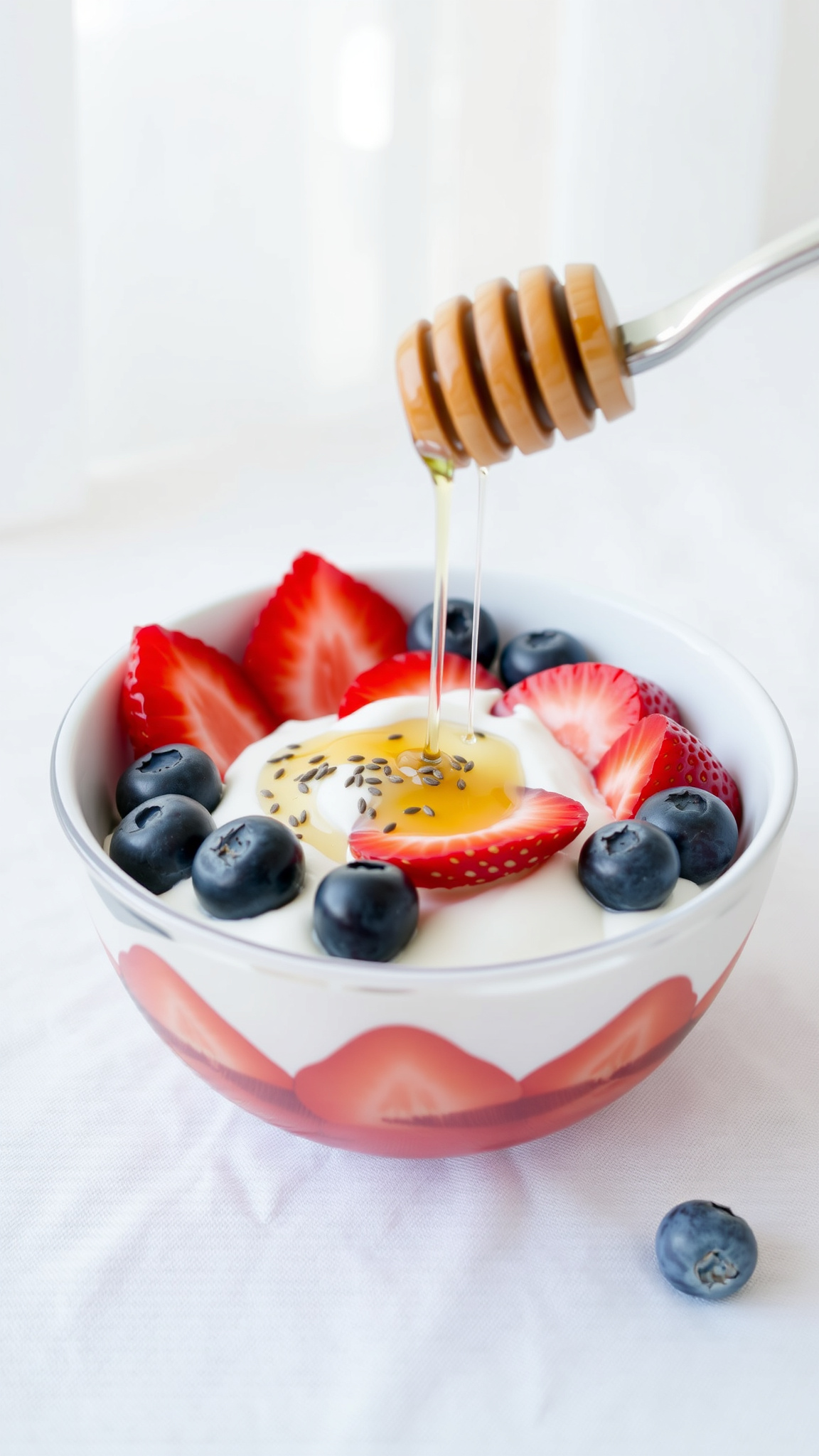
Day 1: High-Protein Greek Yogurt Berry Parfait
This is my go-to for busy Mondays. The Greek yogurt provides a massive protein hit which is essential for satiety, while the berries add volume and fiber without spiking the calorie count.
Ingredients
- 1 cup non-fat plain Greek yogurt
- 1/2 cup fresh strawberries, sliced
- 1/4 cup fresh blueberries
- 1 tablespoon chia seeds
- 1 teaspoon honey or maple syrup (optional)
- Drop of vanilla extract
Instructions
- In a serving bowl or mason jar, mix the Greek yogurt with the vanilla extract.
- Layer half of the yogurt at the bottom of the container.
- Add a layer of strawberries and blueberries.
- Top with the remaining yogurt.
- Sprinkle chia seeds over the top and drizzle with honey if using.
- Serve immediately or cover and refrigerate for up to 24 hours.
Nutrition Profile
| Nutrient | Amount |
| Calories | ~260 |
| Protein | 22g |
| Carbohydrates | 28g |
| Fat | 6g |
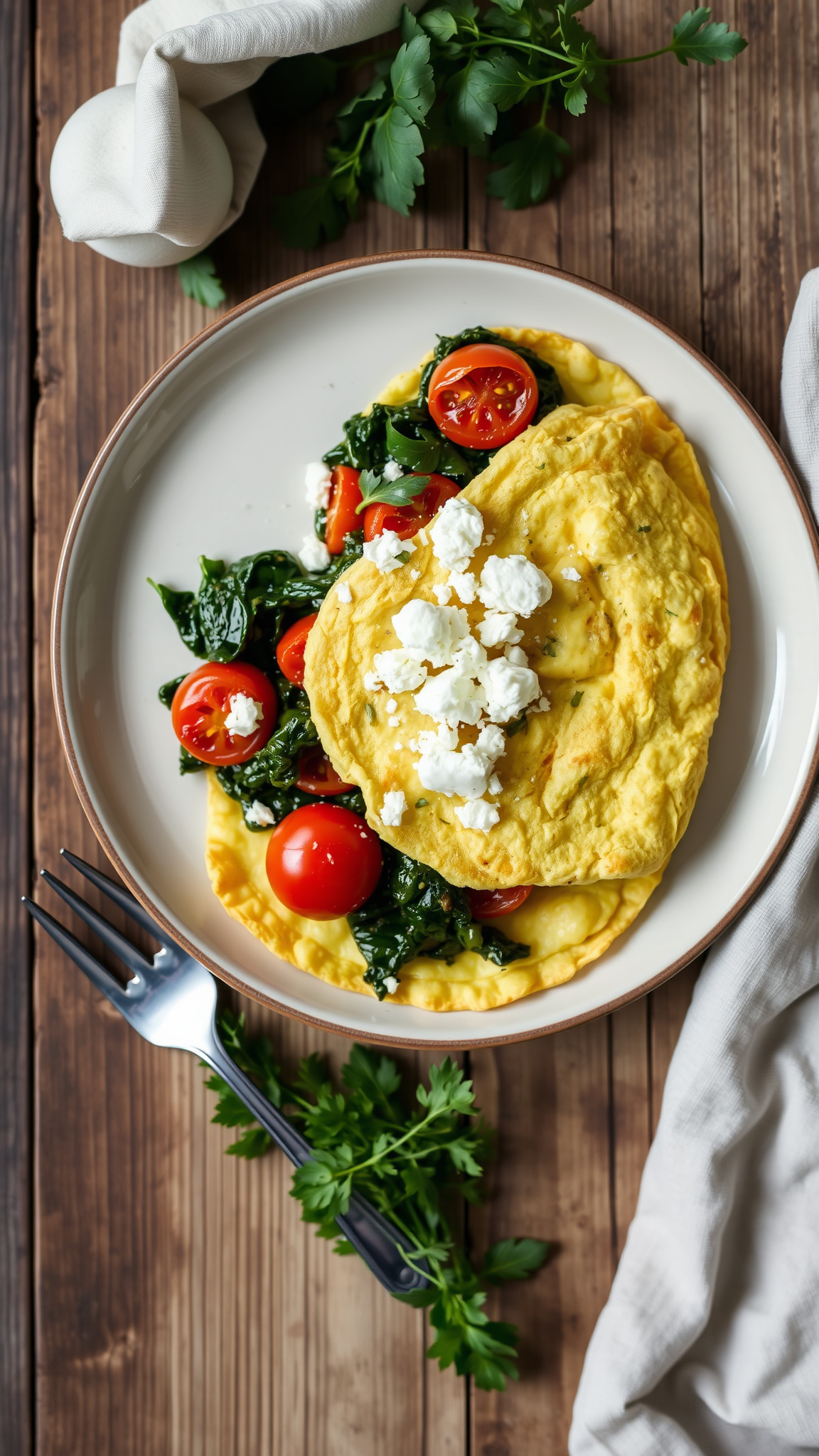
Day 2: Spinach and Feta Egg White Omelet
When you want a hot meal that feels substantial, egg whites are a miracle ingredient. They offer high volume for very few calories, allowing you to load up on vegetables.
Ingredients
- 3/4 cup liquid egg whites (or whites from 4 large eggs)
- 1 cup fresh spinach
- 1/4 cup cherry tomatoes, halved
- 2 tablespoons crumbled feta cheese
- Cooking spray (olive oil or avocado oil based)
- Salt and black pepper to taste
Instructions
- Heat a non-stick skillet over medium heat and lightly coat with cooking spray.
- Add the spinach and tomatoes to the pan. Sauté for 2-3 minutes until the spinach wilts.
- Pour the egg whites over the vegetables. Season with a pinch of salt and pepper.
- Let the eggs set for a minute, then gently lift the edges to let the uncooked egg flow underneath.
- Once the eggs are mostly cooked but still slightly glossy on top, sprinkle the feta cheese over one half.
- Fold the omelet over and cook for another minute until the cheese softens.
Nutrition Profile
| Nutrient | Amount |
| Calories | ~190 |
| Protein | 24g |
| Carbohydrates | 6g |
| Fat | 7g |
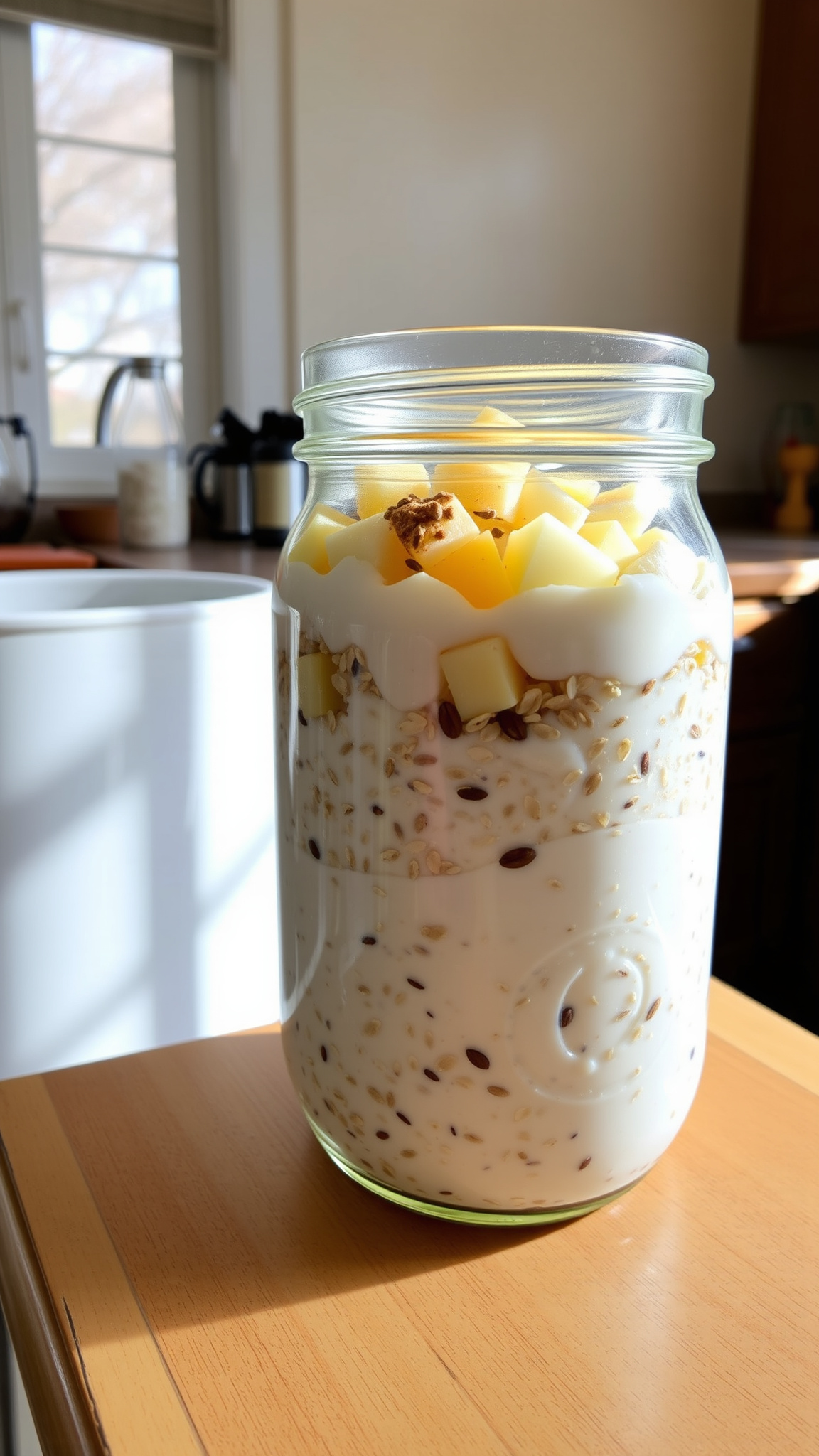
Day 3: Overnight Oats with Almond Milk and Cinnamon
This recipe is perfect for “hump day” when motivation might be dipping. You prepare it the night before, so all you have to do is grab a spoon in the morning. Oats are rich in beta-glucan, a soluble fiber that aids digestion.
Ingredients
- 1/2 cup rolled oats (old-fashioned, not instant)
- 1/2 cup unsweetened almond milk
- 1/4 cup non-fat Greek yogurt
- 1/2 apple, diced
- 1/2 teaspoon cinnamon
- 1 teaspoon flaxseeds
Instructions
- In a jar or container with a lid, combine oats, almond milk, Greek yogurt, cinnamon, and flaxseeds.
- Stir well to ensure the oats are fully submerged in the liquid.
- Stir in the diced apple pieces.
- Seal the container and place it in the refrigerator overnight (at least 6 hours).
- In the morning, give it a quick stir. You can add a splash more milk if you prefer a thinner consistency.
Nutrition Profile
| Nutrient | Amount |
| Calories | ~310 |
| Protein | 11g |
| Carbohydrates | 52g |
| Fat | 6g |
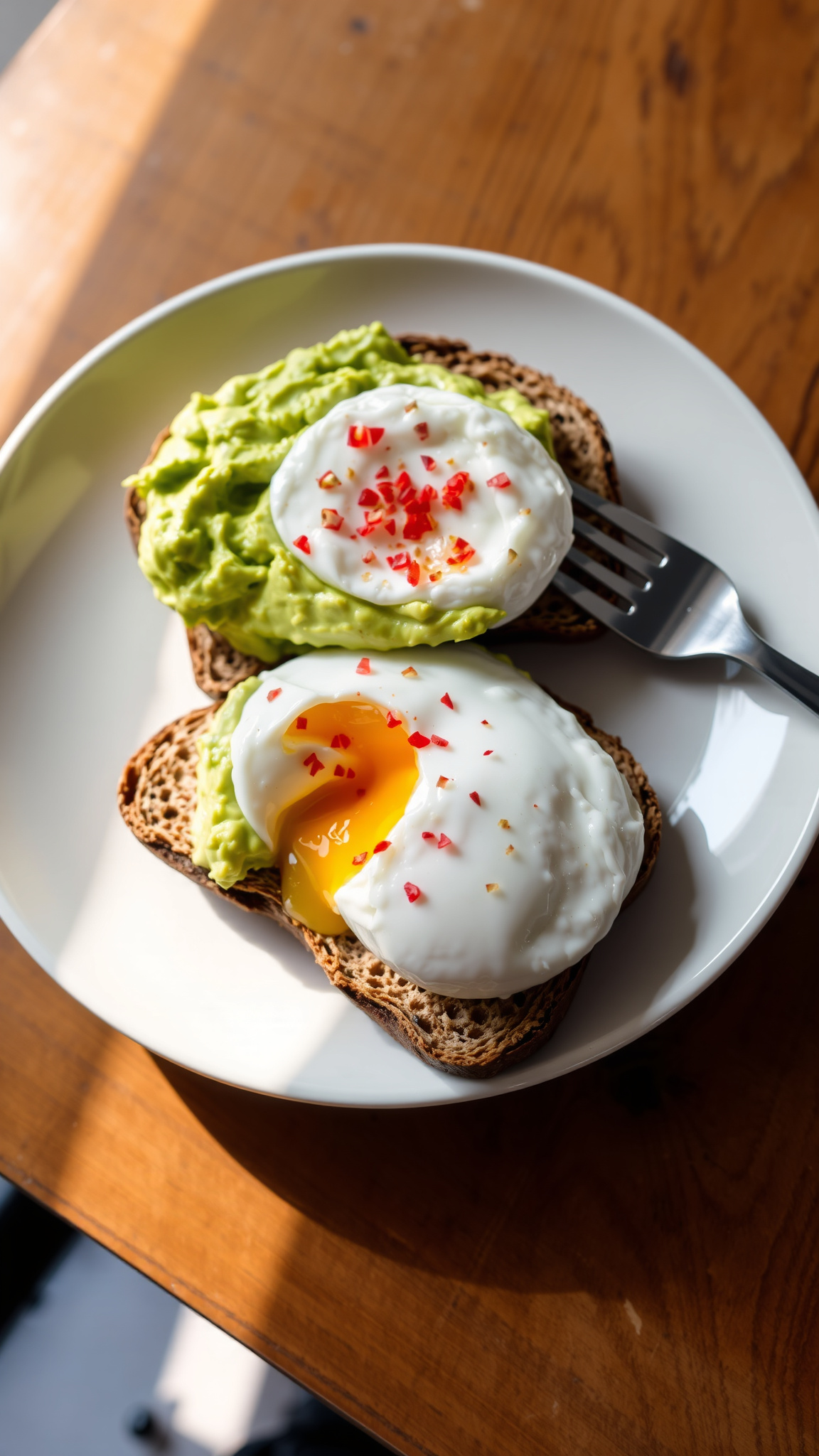
Day 4: Avocado Toast with Poached Egg
Healthy fats are crucial for brain function, even on a low-calorie diet. By measuring the avocado carefully, you get the creamy indulgence without blowing your daily budget.
Ingredients
- 1 slice whole-grain or sourdough bread
- 1/4 medium avocado
- 1 large egg
- 1 teaspoon lemon juice
- Red pepper flakes (optional)
- Salt and pepper
Instructions
- Toast the slice of bread to your preferred crispness.
- While the bread toasts, bring a small pot of water to a simmer. Crack the egg into the water and poach for 3-4 minutes until the white is set but the yolk is runny.
- Mash the avocado in a small bowl with lemon juice, salt, and pepper.
- Spread the mashed avocado evenly over the toast.
- Top with the poached egg and sprinkle with red pepper flakes.
Nutrition Profile
| Nutrient | Amount |
| Calories | ~280 |
| Protein | 12g |
| Carbohydrates | 22g |
| Fat | 15g |
Day 5: Green Volume Smoothie
This is a strategy known as “volume eating.” By using water and greens, you create a physically large breakfast that fills your stomach stretch receptors, signaling fullness to your brain.
Ingredients
- 1 cup fresh spinach
- 1/2 frozen banana
- 1/2 cup frozen mango chunks
- 1 scoop vanilla protein powder (whey or plant-based)
- 1 cup water or unsweetened almond milk
- Ice cubes
Instructions
- Place the spinach and liquid (water or almond milk) into a blender first. Blend until the leafy chunks are gone.
- Add the frozen banana, mango, protein powder, and ice.
- Blend on high until smooth and creamy.
- Pour into a large glass and drink immediately to prevent separation.
Nutrition Profile
| Nutrient | Amount |
| Calories | ~290 |
| Protein | 25g |
| Carbohydrates | 35g |
| Fat | 3g |
Day 6: Cottage Cheese Protein Pancakes
I was skeptical of cottage cheese in pancakes until I tried them. They don’t taste cheesy; they taste like rich, fluffy pancakes but pack a serious protein punch compared to standard flour-based ones.
Ingredients
- 1/2 cup low-fat cottage cheese
- 1/2 cup rolled oats
- 2 eggs
- 1/2 teaspoon baking powder
- 1 teaspoon vanilla extract
- Cooking spray
Instructions
- Place cottage cheese, oats, eggs, baking powder, and vanilla extract into a blender.
- Blend until the batter is completely smooth.
- Heat a non-stick skillet or griddle over medium heat and coat with cooking spray.
- Pour about 2 tablespoons of batter per pancake onto the skillet.
- Cook for 2-3 minutes until bubbles form on the surface, then flip and cook for another 1-2 minutes.
- Serve warm.
Nutrition Profile
| Nutrient | Amount |
| Calories | ~360 |
| Protein | 28g |
| Carbohydrates | 32g |
| Fat | 12g |
Day 7: Smoked Salmon and Cucumber Boats
On Sundays, I like something savory that feels like brunch but is light on carbohydrates. Using cucumber as the “bread” is a refreshing, hydrating twist.
Ingredients
- 1 large cucumber
- 2 tablespoons light cream cheese or whipped cream cheese
- 3 oz smoked salmon
- 1 teaspoon capers
- Fresh dill for garnish
- Everything Bagel seasoning (optional)
Instructions
- Slice the cucumber in half lengthwise. Use a spoon to scoop out the seeds, creating a hollow “boat.”
- Spread the cream cheese into the hollowed-out center of each cucumber half.
- Layer the smoked salmon over the cream cheese.
- Top with capers, fresh dill, and a sprinkle of seasoning.
- Slice into bite-sized pieces or eat as two large boats.
Nutrition Profile
| Nutrient | Amount |
| Calories | ~240 |
| Protein | 20g |
| Carbohydrates | 10g |
| Fat | 12g |
Frequently Asked Questions
What constitutes a “low-calorie” breakfast?
Generally, a breakfast between 300 and 400 calories is considered low-calorie for the average adult looking to maintain a deficit. However, the quality of calories matters more than the number. A 300-calorie sugary pastry will leave you hungry in an hour, while a 300-calorie omelet with veggies provides sustained energy.
Can I meal prep these recipes?
Yes, most of these are prep-friendly. The Overnight Oats (Day 3) and Chia Parfait (Day 1) are designed to be made ahead. You can also chop vegetables for the omelet or blend the pancake batter a day in advance to save time in the morning.
Is coffee included in the calorie counts?
The nutrition facts above cover the food only. Black coffee or tea contains negligible calories (under 5). If you add cream, sugar, or flavored syrups, you must account for those extra calories, which can easily add 50-150 calories to your morning total.
Why is protein important in a low-calorie breakfast?
Protein has a higher thermic effect of food (TEF) than carbs or fats, meaning your body burns more calories digesting it. More importantly, protein reduces the level of the hunger hormone ghrelin, helping you feel fuller for longer periods, which prevents mid-morning snacking.
Conclusion
Sticking to a low-calorie breakfast plan doesn’t mean you have to sacrifice flavor or satisfaction. By rotating through these seven recipes, you ensure your body gets a variety of micronutrients—from the antioxidants in berries to the healthy omega-3 fats in salmon. Success in healthy eating comes from consistency, and the best way to be consistent is to actually enjoy what you are eating. Try these recipes this week, listen to your body’s hunger cues, and adjust portion sizes as needed to fit your specific goals.


